


David Reese: Palm Beach

Updated: Jan 4
Chessy Ricca
Professor R. Arsenault
Oral Histories
David Reese: Palm Beach
The bar of the Sailfish Club on Palm Beach during a hot late summer afternoon is a dead zone. Ryan the bartender is watching a football game and I’m awkwardly sitting alone looking at the old man sitting across from me. A few local children play in the recently renovated pool that overlooks the intracoastal waterway, providing an excellent view of the sunset. I’m waiting to meet David Reese, one of the last remaining old natives to the now over-populated island of Palm Beach. We’re meeting to discuss the once young island in its early prime and was it was like growing up. I didn’t realize the old man was him. Nor did I realize the impact this man had on the Island and it’s surfing history. What I did know was David is a descendent of Elijah Newton Dimick, better known as “Cap Dimick”, one of the first settlers and first mayors born in Palm Beach. The Dimicks originally arrived from Michigan in 1876. Cap Dimick is undeniably the second most important man in Palm Beach’s history, just after Henry Flagler. Dimick opened up the first hotel on the island; established a hack line from Lake Worth (south) to Jupiter (north); was a county commissioner; served on the Dade County School Board and in the state legislature; helped organize the first local bank; and with his business partners, plotted the Royal Park subdivision and built the middle bridge (Royal Park Bridge).
My interest in this story dates back to my childhood in the 1990s. I was able to watch my home change in just 28 years. Part of me will forever be unable to accept this truth. What used to be a quiet town run by locals and visited by the “snowbird” New Englanders has evolved into a trending destination for Ontario license plates and those wishing to ride on open-air tour buses listening to a man on a loud speaker guess which celebrity lives in which house. I have heard them many a times say, “on your right is Cameron Diaz’s house”, when really a local lawyer and his family bought the house five years ago because of the large yard and excellent ocean view. A bike trail exists on the west side of the island that runs roughly 3.5 miles from “mid-town”, where town hall is, to the “north-end”, where the Lake Worth Inlet is. Local children used this trail as their playground and local bicycle highway. Now the trail is crowded with yoga pant wearing moms pushing strollers looking for the perfect photoshoot location for their Instagram page. I would bike the length of the trail and wonder what was on this exact path before I was ever a thought in my parent’s mind. I wanted to know all about the clandestine lifestyles that happened within the mahogany walls of the boathouses lining the bike trail. How much cocaine was snorted in that house? How many extramarital affairs took place in that garden? There has always been a darker side to Palm Beach that these visitors will never know. That is what I cling to; hidden Palm Beach, lost in time and kept high, deep in the pecky cypress ceilings.
David Reese[1] is almost to his 90s but he keeps his soul young with slip-ons Vans and old linen button-downs. While we sit and talk at the Sailfish Club bar, fellow local and dear friend to David, Matthew Stevens, chimes in occasionally to glorify and expand on the old Palm Beach. David’s celebrity status suits him well given all he has done in the world of surfing. He helped co-found the Palm Beach Surfing Association which basically saved all of the East coast of Florida from a potential ban on the sport. But his greatest achievement was helping found the Eastern Surfing Association in 1967[2]. David put surfing on the map long before MTV helped make the culture trendy.
David was born across the ditch (slang for intracoastal to the non-locals) in 1932 at Good “Sam” Samaritan Hospital. His father was born here as well but the date is unknown to him off hand. My goal is to learn what Palm Beach was like for a young David Reese. His first house was located at 230 Brazilian Court on a small lot with turtle pens which is now office buildings and parking lots full of overpriced Mercedes Benzs and one too many bougainvillea. If I sound judgmental, it’s because I have a hint of jealousy. I will never be able to experience Palm Beach like David or Matthew. I am upset that greed is more prevalent on the island today than it was a century ago. Unfortunately, that is how the world turns. In his childhood, David had an “all-purpose black servant” named Luis. She would take him on his perambulator to the Memorial Fountain in the heart of town, so he could play on the bronze equine statue. Having a black servant in the 1930’s was common for the average Palm Beach household. Henry Flagler created a local black population by hiring negro families to work at his multiple Palm Beach hotels. Local legend tells a darker side to the history of Palm Beach’s negro inhabitants. The legend of the Styx began on Palm Beach’s county road, just north of the Royal Poinciana Hotel. The hotel in the 1890s housed just over two thousand negro workers. The tale states that Henry Flagler, local tycoon, was eager to expand his multiple hotel properties, but the negro Styx was on his prime development land. His plan was to have a local circus visit the town of West Palm Beach, just across the bridge, so the black workers could have a day off and enjoy Flagler’s generosity. While the show was going on, Flagler had the Styx burned to the ground to make way for his new tourism plans. I have been told this story for as long as I’ve been alive. While David was unaware of the existing racism on Palm Beach, it has been a theme throughout the island that unfortunately still exists today. For example, there are three main churches on Palm Beach. In my 28 years of life, I cannot remember a time when I’ve seen an African American family attend a Sunday service.
The island’s property lots had no lines. They were boggy and infested with pesky land crabs. “You couldn’t go down the street without hitting them! And the stench the next day was ferocious! I would stalk them with my BB gun just for fun!” A site like this is rare today. Most of the Island’s land crab population has been forced out by snowbirds who find their presence particularly bothersome when they awake to their pool filled with the dead crustaceans. In the middle of the night, the crabs leave their dirt dens and accidentally fall to their deaths in the chlorine pools.
The island was a playground for young rebellious Palm Beachers. Kids would dirt bike on the Palm Beach Country Club golf course, something that would certainly result in a written arrest by today’s standards. In turtle nesting season, the hatchlings would crawl from their sandy nests and a .22 caliber would be their only defense. The sea birds and hungry land crabs looked forward to feasting on the weak hatchlings, but not when a revolver was present. David would blast the crabs away one by one. A photo once made the headline article of Palm Beach’s Shiny Sheet showing local boys holding shotguns and ducks on the north end. Hunting was allowed and welcomed. It kept invasive animals out of the many Mizner yards. The north end of Palm Beach was still a swamp at this point. No one wanted to tame the swampy jungle just yet.
Palm Beach Public School is where David attended grade school. Back then, there were 3 grade schools on the island; Palm Beach Public, Palm Beach Day, and Graham Eckes. Graham Eckes is no longer in existence. Parents of local children, though, speak fondly of their experience going to grade school at Graham Eckes. That school’s property was subdivided to make room for more houses. For David to get to the Public school, he would have to cross a trestle carefully because underneath was where gators liked to rest. Back in the earlier half of the 20th Century, Palm Beach had way more wilderness than one could think possible. That local ecosystem didn’t last long with the influx of Northerners seeking a warm new start after the Depression era. Adison Mizner was the hippest architect money could buy. Huge estates, usually named starting with either “casa” or “playa”, boasting immense gardens and elaborate pools were built spanning the ocean to intracoastal. One of the most unfortunate events to happen to the old culture of Palm Beach occurred in the 1950’s. Family money ran out and heiresses could no longer afford the extravagant houses they’d been living in. For example, Playa Riente[3] owned by Mrs. Dodge was razed in 1957. Nor could anyone else. The estate furnishings were sold at auction and the beautiful Mizner properties were knocked to the ground and subdivided. A few Mizner properties still exist, and bits and pieces of his famous Mizner Industries tiles can be spotted scattered throughout town.
Today’s culture on Palm Beach is built by a universal reputation that is materialistic and narcissistic with a poke of Botox. That description, however, pertains to those who recently moved to Palm Beach with no previous knowledge of the island’s historically jovial personality. In David’s youth, there was no division. There was no segregation. The residents of the Island were everyday people. High Society had their place but so did the blue-collar families who worked hard and earned an modest living. Life was shared. The Flagler bridge, a.k.a. the north bridge, did not exist as a separation line between the poor and the rich. The three bridges (Flagler Memorial bridge, The Royal Park Bridge, and The Southern Blvd. Bridge) connected people and connected businesses in a way that allowed everyone to prosper. It wasn’t until 30 years ago, according to Matthew, when the residents became competitive and the price of a lot skyrocketed. I grew up on Dunbar road, just north of the Flagler Memorial Bridge. Currently my childhood house is on the market for roughly five million. In David’s prime, a house on the Dunbar ocean sold for $75,000. Property back then was cheap enough to where the average family lived comfortably in mid-town. In the later 20th century, the average person was no longer able to afford a house on Palm Beach. West Palm Beach became the service station to the island. This transition marks the shift from air-conditionless old Florida architecture to contemporary Nantucket style mansions filled with trust-fund children bragging about the Range Rover their parents got them for their 16th birthday. I know these words sound harsh. From an islander’s perspective, its these cringy observations that prove we need to get back in touch with our past. Palm Beach society was not always labeled as opulent. The pioneer lifestyle lingered throughout the decades up through the time Lilly Pulitzer started designing her now infamous sun dresses to cover-up the lemonade stains from her local stand, where she would often be seen barefoot.
The fun part about this interview at the moment is witnessing the character shift that takes place in David and Matthew when friends pass by. Immediately, talk of the old romantic island is swept away with the mention of the hippest restaurant in their area. “Oh, have you been there? I heard its wooonderful! I’ll be going in October on our way to Asheville.” Even I have an alter-ego that appears when family friends enter the vicinity. Wearing masks and acting cosmopolitan is a practice that I sporadically indulge in. In order to protect my family name, I have to act as if life is beyond marvelous. Which it is of course, but the smile I put on must hide the past mistakes I have made. My stints in rehab will forever be locked away from Palm Beach’s public eye. Although, some locals wear their drug abuse with pride, sharing the white powdery substance with anyone who is willing. I’m grateful those days are over for myself, having earned six years clean and sober and I’m still trudging along today. David never misses a beat though. He is sharp, wise and full of moxie. He is a local celebrity, a title that took a lifetime to build. There are not many who can call themselves a local celebrity, apart from the Donald Trumps and Rod Stewarts of the island, but David is one of the lucky few. I’ve witnessed multiple people in the span of two hours go far out of their way at the club to shake David’s hand. Suddenly I feel honored to be the one interviewing him.
In the 1950’s, surfing was banned on Palm Beach. David’s father was the Mayor at the time and told local police to turn a blind eye whenever David was in the water. But when the craving to glide over the pristine waters hit him, David and his friends would venture to Singer Island, the next island north, and cruise the waves of the Surf-a-go-go. Riviera Beach, which is west of Singer Island, was once referred to as Conch City because of all the Bahamians that lived in the area during the winter fishing season. Riviera Beach was a ship-building town and a worker’s town before it became the dangerous bullet-riddled ghetto that it is today. It was at one point the most fashionable town to live in. The families who could no longer afford to live on Palm Beach would relocate to Riviera Beach. As more and more workers migrated to West Palm Beach to get in on the opportunities to work for the rich and famous, Riviera families got forced out.
Surfing, fishing, and bar hopping were the favorite past-times of rebellious Palm Beachers like David. The territory for fun wasn’t very large. The county marked the boundary lines for well-intended trouble. There was no use in leaving Palm Beach county unless it was for college at the University of Virginia or when David was in the Navy. The Navy was what men David’s age did in the mid 20th century. Afterwards, however, was what left David confused about his next phase in life. So, he entered into the Real Estate game. David’s profession and vast knowledge of Palm Beach Real Estate landed him some pretty nifty sales. Even in his old age, he is still a salesman.
Palm Beach went through its issues, ebbs and flows, and still does today. At one point, according to Matthew, it was illegal for men to be shirtless. The rules of the island depended on who was in mayor at that time. The Sailfish Club on the north end, known for housing the oldest sailfish tournament in the world, is laid back. A blazer and flips flops can get you through the doors in the summer time. However, on the south end of the island, the prominent Everglades Club filled with walkers and canes rules the evenings for the elite one percent. The past president of the Sailfish club once tried to turn its walls into the Everglades Club and was met with angry men who were desperate to keep the slot machines and pool tables. Innocent gambling kept the children busy while the adults drank their French 75’s. Club life was important to the residents of Palm Beach. It became a symbol of wealth. Club membership in the second half of the 20th century was what separated the rich from the average. David was a member of both, belonging to the Sailfish club for life and dropping the Everglades Club after 51 years of loyalty. The choice of club depended on what the member’s hobbies were. The Sailfish club was a sporting club. The Everglades was tennis, dancing and dinner. But, as Matthew describes, the Everglades Club was a place where old people went to die. He remembers going there with his mother and never seeing a friend his age or anywhere near that mark. Even today, the Sailfish club is full of faces that aren’t recognizable. What was once a place for nightly family social hour has now been transformed into a label of social status based on membership. This is normal though. It is the changing of the tides of Palm Beach. Generations expand and faces turn unfamiliar.
The glory days of Palm Beach can be summarized brilliantly in the words of Matthew Stevens, fellow Islander born and raised. “One day we’d be trying to chase cattle and the next we’d be in black tie at the Breakers”. The island was a place for partying, rebellion, elegance and scandal. It was the Wild West for the wealthy. To the few locals who know of the island’s history, please do not forget what tales rest beneath your coquina porches. Soon Palm Beach will be unrecognizable to the inhabitants of the 21st century. The Palm Beach County Historical Society, The Palm Beach Preservation Foundation and a few other organizations do a remarkable job protecting our extensive history. David Reese has royal blood by Palm Beach’s definition. He is a trend-setter and the face of the rebellious few who paved the way for the future generations like Matthew Stevens who wanted to live wild and free. His lifestyle is not for everyone, nor could it be imitated. If it weren’t for David and his gang of deep-pocketed surfers, Palm Beach may have ended up boring, stiff, and too proper for even the Kennedy’s. This interview opened my eyes into a world I knew existed but I could only dream about. The old school figures of epic Palm Beach are either no longer alive, or their mouths are sealed shut to keep local secrets out of the ears of non-natives. But, if anyone has the time, look for an old man with a smile, a cane, and a cocktail and ask about his time on Palm Beach. Secrets will always find a way out if you’re willing to listen.

Figure 1

Figure 2
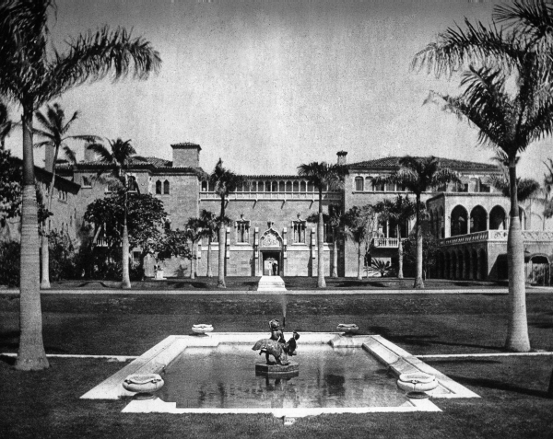
Figure 3
[1] See figure 1: David Reese at his “North End” beach bungalow.
[2] See Figure 2: David Reese and friends at Reed Road, North End, Palm Beach. 1980’s
[3] See Figure 3: Playa Riente 1923-1957

Comments